
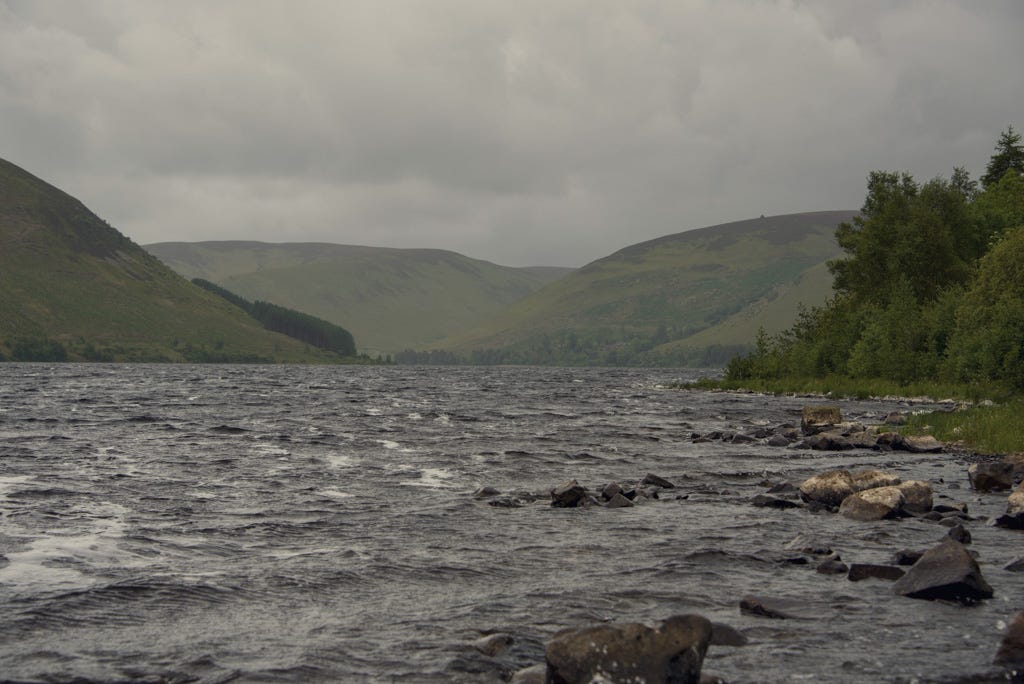
Distance: 7 miles, full loop · Time: 3 hours at a wandering pace · Difficulty: Easy, mostly flat
A short drive up the A708 from Ladhope brings you to St Mary’s Loch, the largest natural loch in the Borders and arguably the most beautiful. It sits in a basin scooped out by glaciers, fed at its head by the Megget Water and emptying east into the Yarrow. On a still spring morning the surface mirrors the hills so completely that the world seems to fold in half.
Start at the small car park at the northern end, near the Loch of the Lowes. The path follows the western shore for the length of the loch — open, easy walking with the water on your left and the slopes of Bowerhope Law rising on your right. In May you’ll likely hear curlew, lapwing, and golden plover in the fields beyond the path; if you’re lucky and quiet, an osprey overhead. Red squirrels are doing better here every year, thanks to Borders Forest Trust replanting native woodland on the slopes.
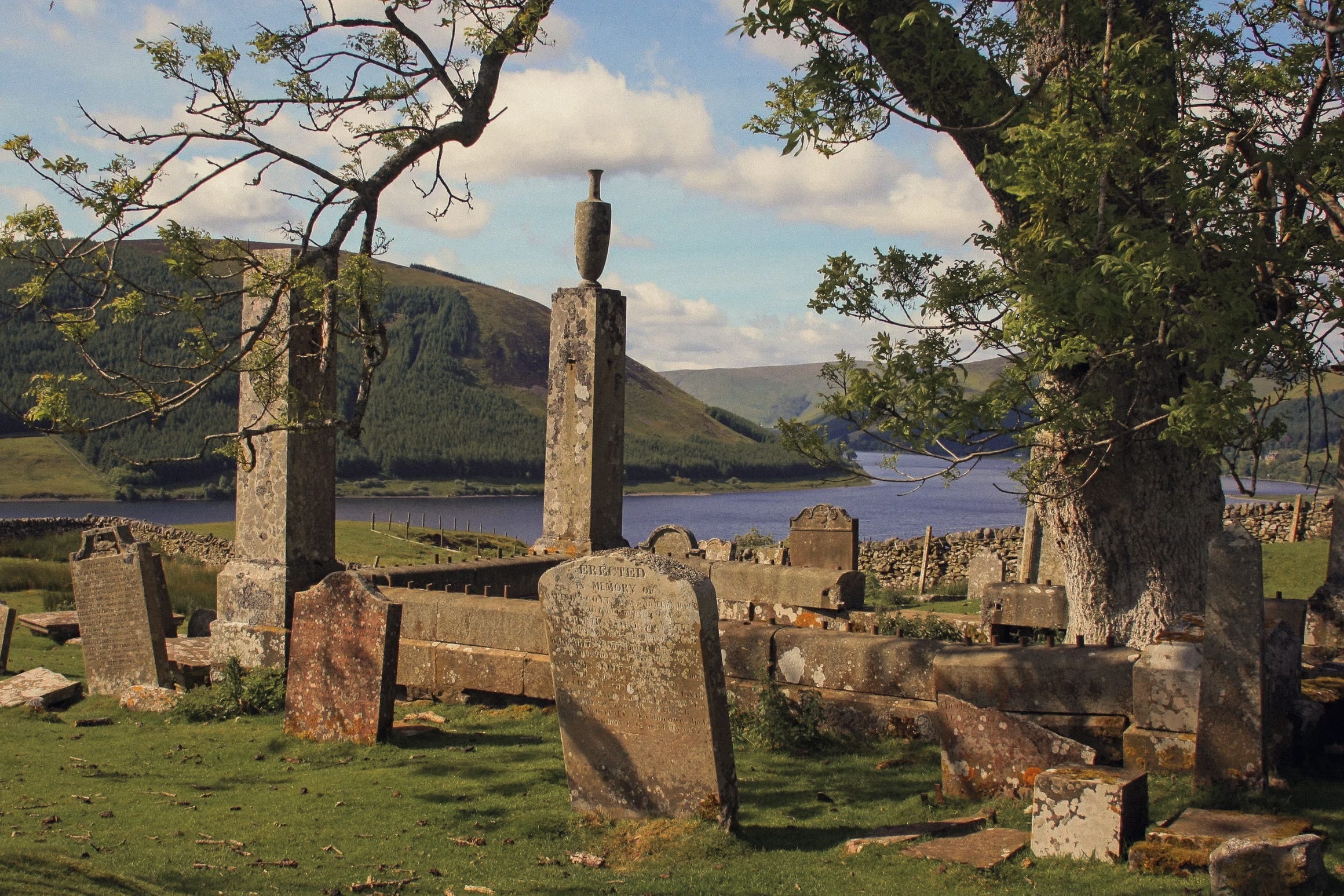
About halfway down the western side, take the short detour up to St Mary’s Kirkyard — the church itself is long gone, but the burial ground remains, and the views from up there over the loch are remarkable. This is the kirkyard where William Wallace was named Guardian of Scotland in 1298; it’s also where, three centuries later, the open-air “blanket preachings” of the Covenanters were held during the years when worship outside the established kirk was punishable by death. The hill above the kirkyard was used as a lookout. Stand up there now and you’ll see why.
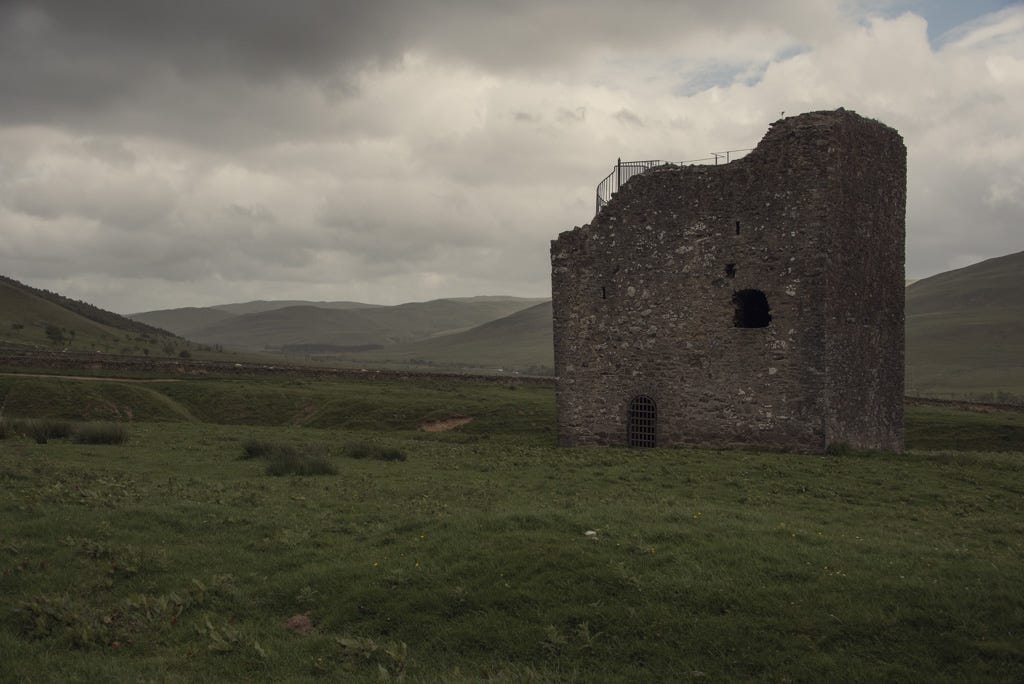
Back on the loch path, continue south to the foot of the loch. Just before you cross the bridge to come back along the eastern shore, there’s another detour worth taking: Dryhope Tower, the ruined Scott stronghold that gave us Mary Scott, the “Flower of Yarrow,” who married Auld Wat Scott of Harden in 1576 and from whom Sir Walter Scott himself was descended. The tower is a roofless stub now, but it’s the kind of ruin you can climb inside, look up at the sky, and feel the weight of four hundred years of Border history pressing very gently on your shoulders.
Come back along the eastern shore for a different aspect of the loch, then back to the car park. If you can plan it for a clear evening, the walk works equally well in reverse, ending with the sun setting behind the western hills and the water turning to copper.
Tibbie Shiel’s Inn sits between the two lochs — sadly closed for some years now, but you can still see the building. It was once James Hogg’s regular haunt; his statue stands across the road, looking out over the water he loved.
From The Scullery
Letters from the Scullery is a bi-monthly publication from The Scullery at Ladhope Farmhouse, a boutique one-bedroom cottage in the Yarrow Valley, Scottish Borders. Join the Inner Circle at the-scullery.com for early access to dates and Inner Circle rates on midweek stays.